Running Economy: Why Strength Work Makes You Faster Without More Miles
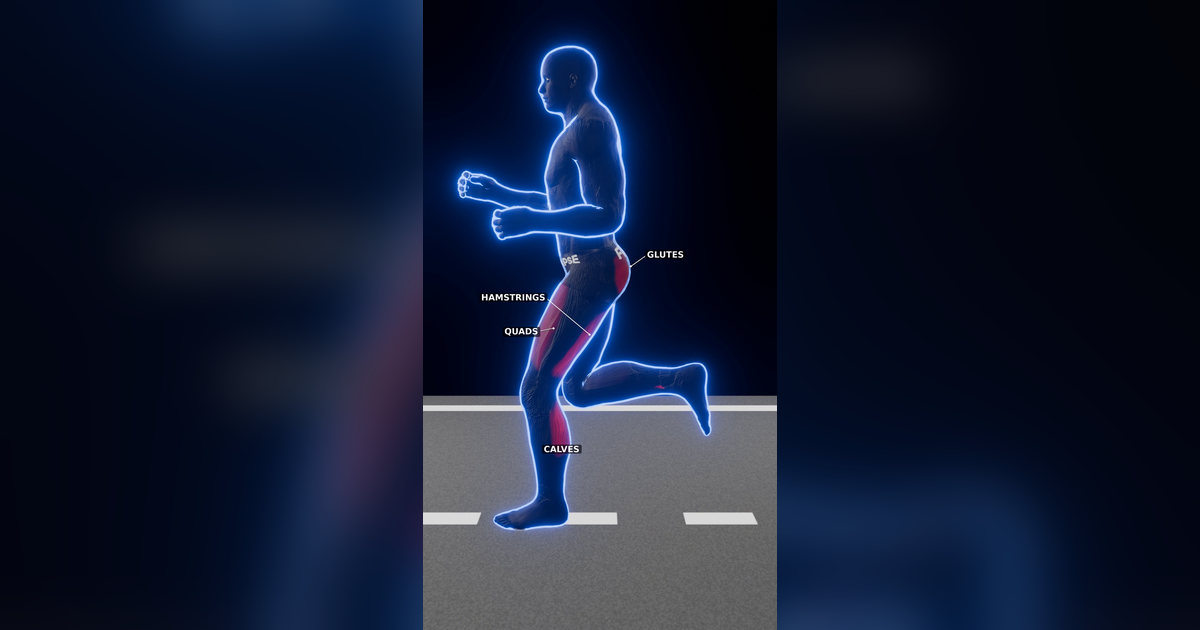
Two runners with the same VO₂max rarely race the same time. A large part of the difference is running economy — how much energy you burn to hold a given pace. Better economy means the same speed costs you less.
Most runners try to improve it by running more. There is a cheaper lever, and the research on it is unusually specific about which kind of strength work pays.
Your pace changes the mix, not the answer
The 2024 review that anchors this article did something unusual: it reported results by the speed the runner was tested at.1 That turns out to matter — but not in the way it is usually summarised.
Lifting heavy worked across 8.64–17.85 km/h. That span covers almost every runner, recreational and fast alike. So load is not the elite’s tool; it is everyone’s. What your pace changes is how much choice you have alongside it:
- Faster than about 12 km/h (quicker than 5:00/km, or 8:03/mile) — heavy lifting is the only method that kept working. Plyometric training stopped helping at those speeds, and trended slightly the wrong way. If you race here, load is not optional.
- At or below about 12 km/h — heavy lifting still works, and jumping works too. You have two levers instead of one, which also means you can get a real return without a gym. Load is still the stronger bet; it just is not the only one.
- At any pace in the studied range — doing both beat doing either. Combined training produced the largest improvement of any single method.
So this is not a beginner’s article or an elite’s article. It is the same evidence for both. The practical difference is that the faster you run, the more of the benefit has to come from the bar.
What the meta-analyses actually found
A 2024 systematic review in Sports Medicine pooled strength-training trials in middle- and long-distance runners and separated them by method. High-load and combined training produced small-to-moderate improvements in running economy. Plyometric training improved it at speeds up to about 12 km/h. And two methods produced no improvement at all against controls: submaximal-load training and isometric training.1
Worth being precise about that last sentence, because “submaximal” is easy to misread. The categories are defined by load:
| method | load | verdict on economy |
|---|---|---|
| High-load | >80% 1RM | improved across 8.64–17.85 km/h — more so above 12 |
| Plyometric | <40% 1RM, explosive | improved only at or below 12 km/h |
| Combined (both) | — | best overall, moderate improvement |
| Submaximal-load | 40–79% 1RM | no improvement |
| Isometric | holds | no improvement |
So the dead zone is moderate-weight lifting — the comfortable three-sets-of-ten middle ground. Bodyweight jumping is not in that dead zone: it is the plyometric row, which is why it earns a place below 12 km/h alongside the heavy work rather than instead of it.
“Do some strength work” is not the finding. Lift heavy, jump, or do both is the finding.
The part that surprises people: it does not work by making your legs bigger. The reviews attribute the gain to neuromuscular and musculotendinous changes rather than muscle size — a stiffer, springier leg returns more elastic energy per step and spends less time on the ground.2 Programmed this way, body mass generally does not move.
Which muscles do which job
A stride is not one movement, and the muscles are not interchangeable.
Each section below gives two lists. Bodyweight is where you learn the movement and where to start if you have never lifted. Loaded is where the economy evidence actually sits — high-load work was the method that improved economy across the widest range of speeds, and “high-load” means above 80% of your one-rep max.1 As a practical rule of thumb that is roughly the most you could lift about eight times before form fails, so it means few reps and real weight, not a comfortable set of fifteen. Bodyweight first, then load it.
Calves — the support, not the push
Up to around 7 m/s, the ankle plantarflexors — soleus and gastrocnemius — are the largest contributors to vertical support. They hold you up more than they push you forward, which is the opposite of how most people picture them.3
Bodyweight

Loaded


Glutes and hamstrings — the drive
Hip extension is what puts force behind you. Above ~7 m/s the hip muscles are also what raise stride frequency.3
Bodyweight
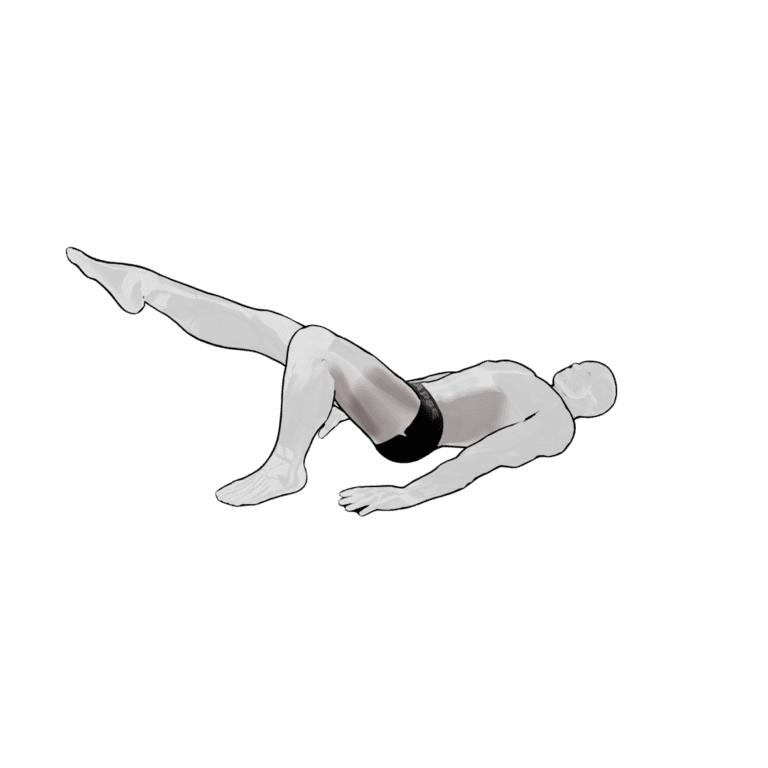 Single-Leg Glute BridgeOne foot drives the whole lift while the other stays off the floor. The working glute takes roughly double the load, and the core resists the hips twisting.
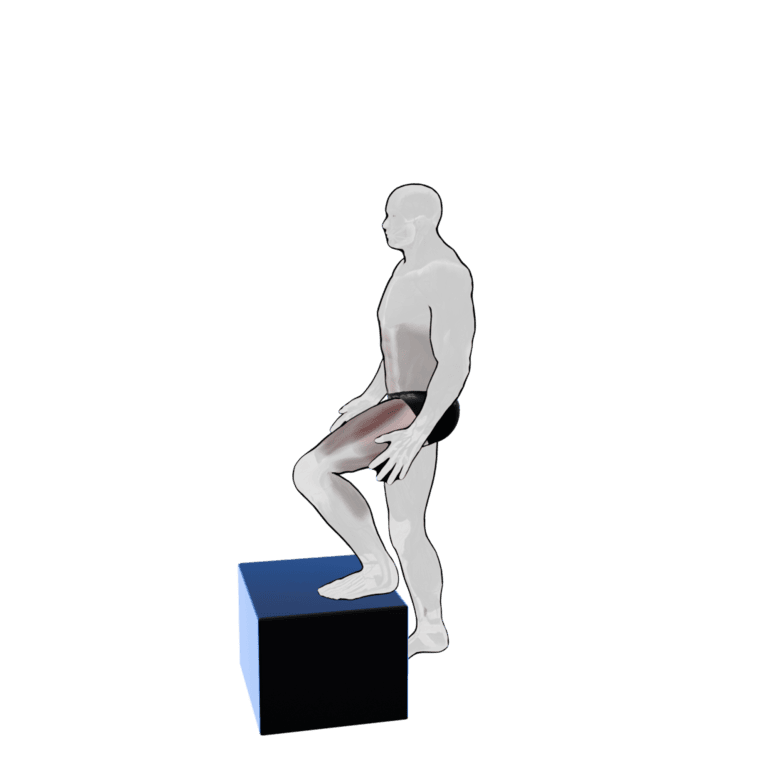 Step-UpDrive up onto the platform with the leading leg doing the lifting; the trailing leg only follows. Step down under control rather than dropping.
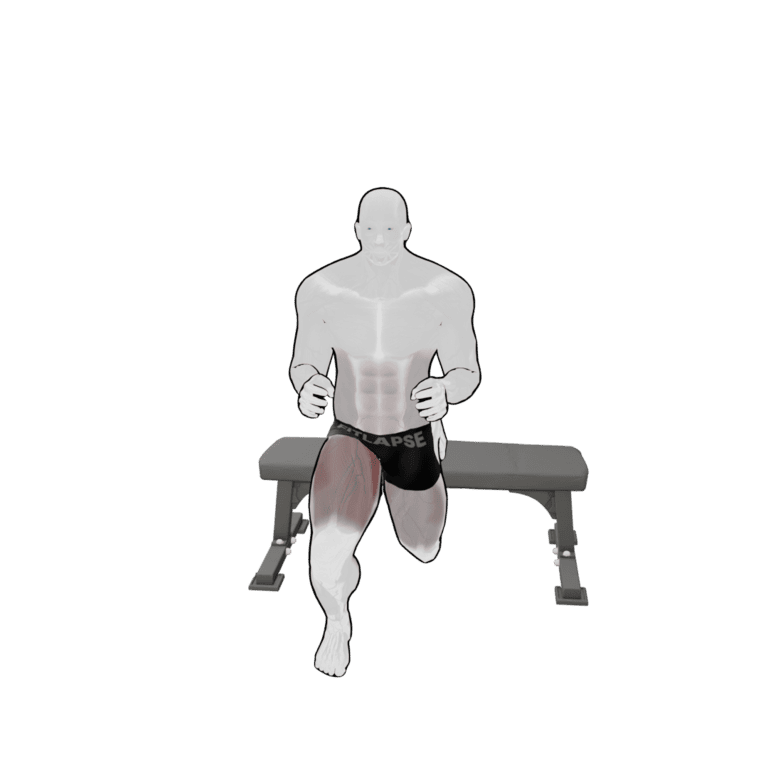 Bulgarian Split SquatWith the rear foot elevated behind you, almost all the load sits on the front leg. Lower straight down and drive back up through the front heel.
Loaded — the split squat is the one to prioritise: elevating the rear foot puts almost all of the load on one leg, which is how running works.
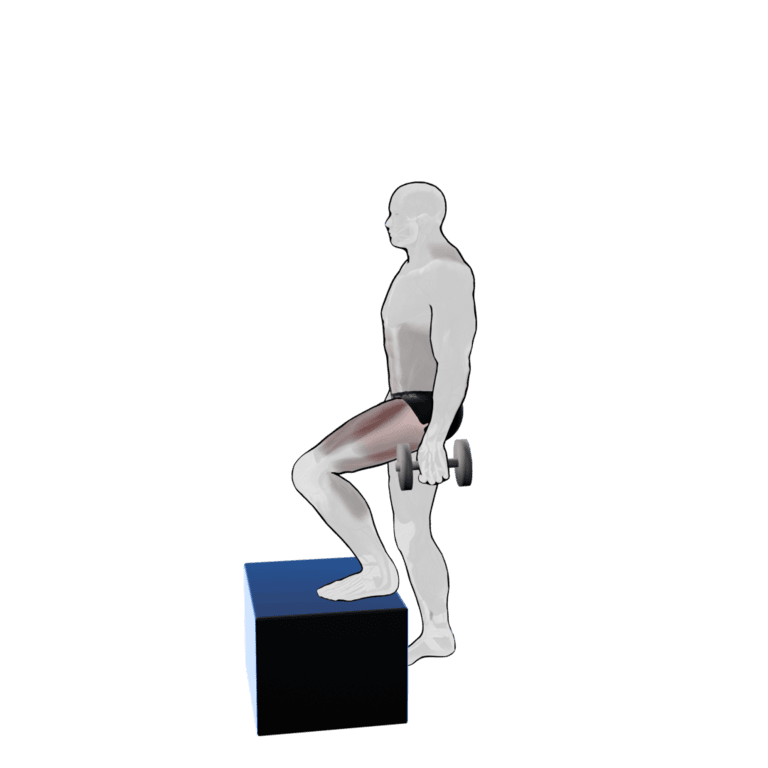 Dumbbell Step-UpA step-up carrying a dumbbell in each hand. Keep the load still — letting it swing turns the lift into momentum instead of leg work.
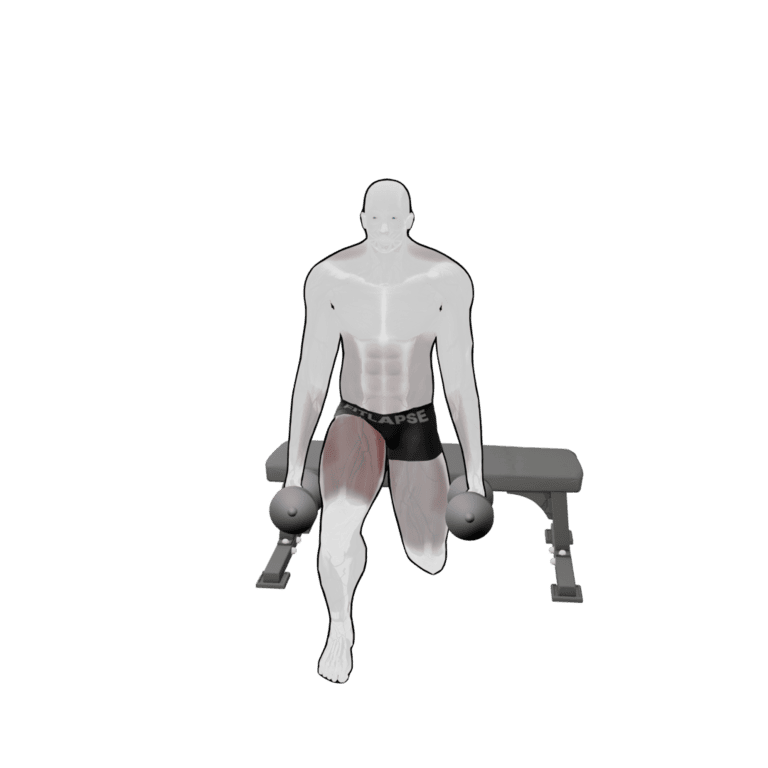 Dumbbell Bulgarian Split SquatRear foot elevated, a dumbbell in each hand. One of the highest loads per leg you can reach without putting a bar on your back.
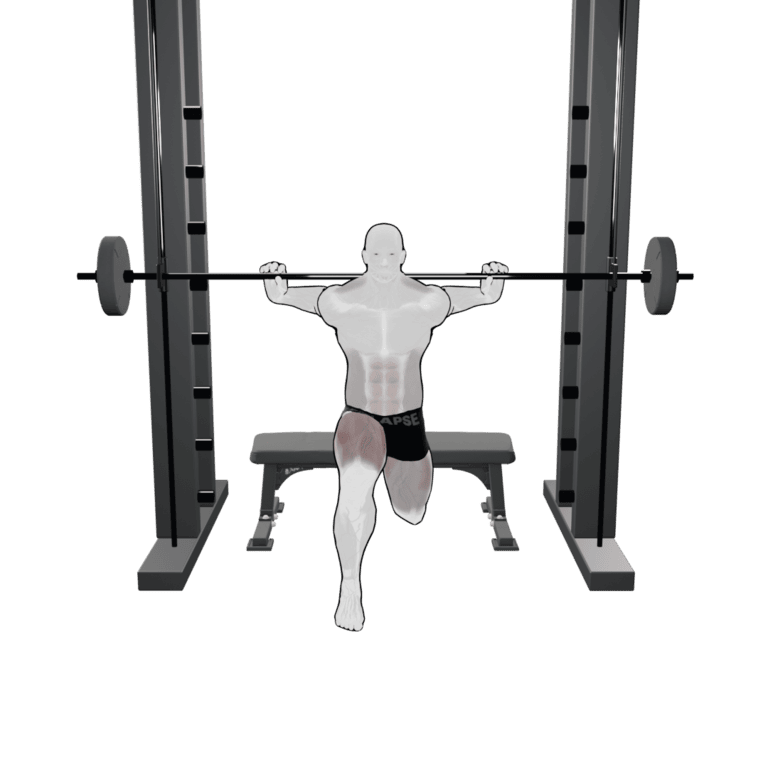 Smith-Machine Bulgarian Split SquatRear foot on a bench with the bar on a fixed track. The guidance lets you load the front leg heavily while staying upright.
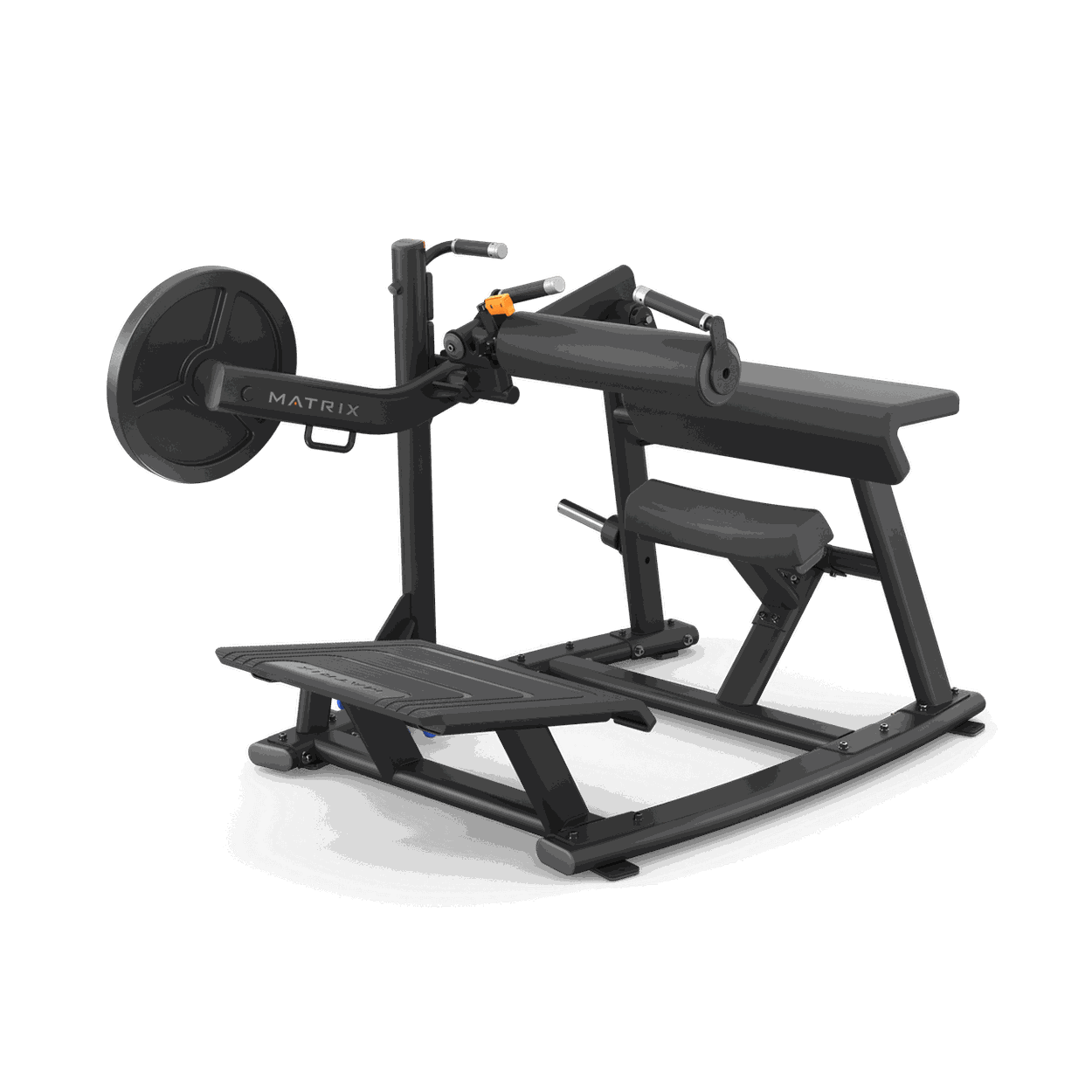 Hip Thrust MachinePlate-loaded machine for hip thrusts, isolating the glutes with the back supported
Quads — accepting the load
They absorb the landing rather than producing the push, which is why single-leg work matters more here than volume.
Bodyweight
 Bodyweight SquatMaster the bodyweight squat — the foundation of lower-body training. Build quads and glutes anywhere, with proper form, common mistakes, and easier and harder progressions.
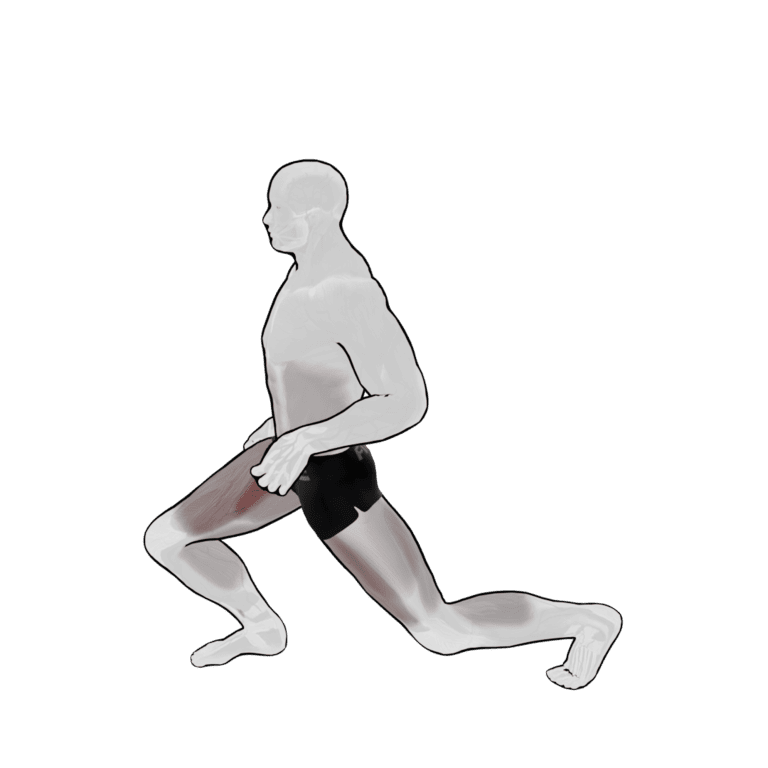 Bodyweight LungeStep forward and lower until both knees are near 90°, then push back through the front heel. The front leg does most of the work; the rear leg mainly balances.
Loaded — the guided versions are the easier place to go heavy, because balance fails before the legs do when you are holding dumbbells.
 Dumbbell SquatTwo-hand dumbbell squats build quads and glutes while your core keeps your torso stacked. Hold dumbbells at your sides for stability, or switch to a barbell when you want heavier loading.
 Smith-Machine SquatThe Smith machine keeps the bar on a fixed track so you can squat with a more upright torso and steady balance. Sit back into your hips and drive through your heels. Main muscles: quads and glutes.
 Barbell Back SquatTraditional barbell back squat targeting legs and core
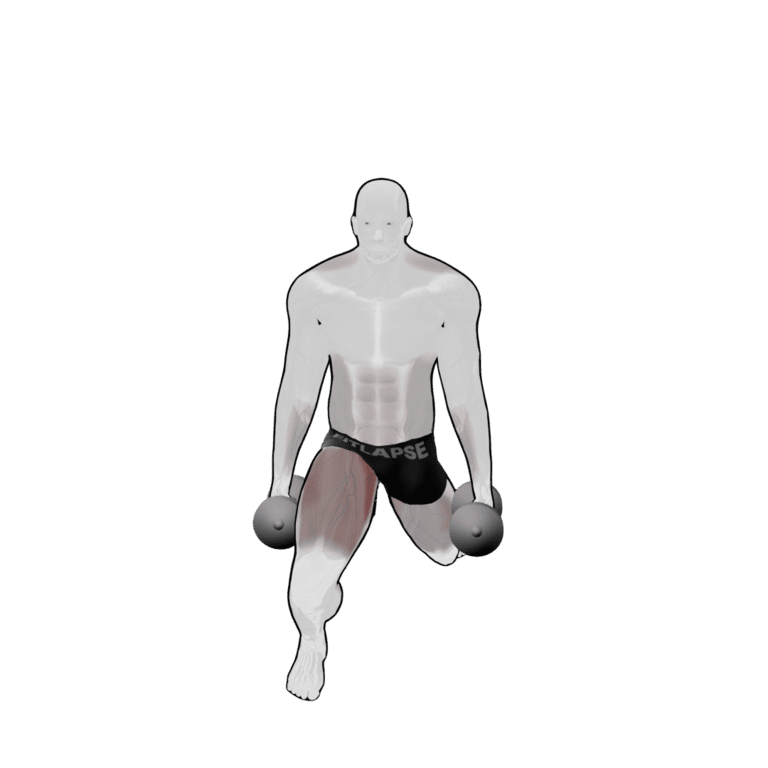 Dumbbell LungeA lunge loaded with a dumbbell in each hand. The added weight hangs at your sides, so grip and trunk stability matter as much as the legs.
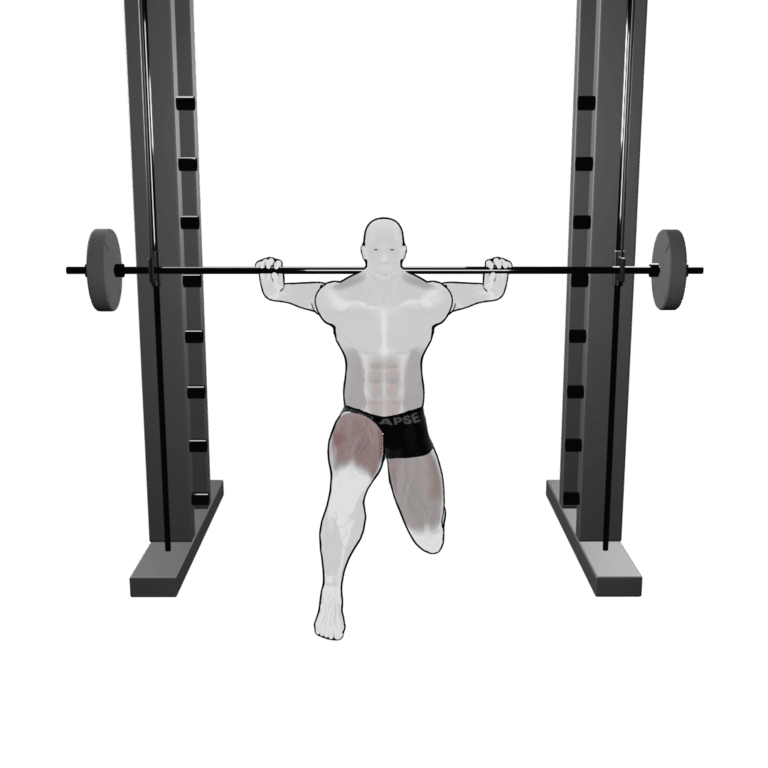 Smith-Machine LungeThe fixed bar path removes most of the balance demand from a lunge, so you can push the front leg harder without fighting to stay steady.
Trunk and obliques — stopping the leak
They keep the pelvis from dropping, so the force you produce goes into the ground instead of sideways.
 Moving Side PlankThe moving side plank adds hip dips to the lateral plank, driving your obliques through repeated controlled flexion while your shoulder stabilizes the body. Lower your hip toward the floor and lift back up without rotating your torso. Main muscles: obliques and abs.
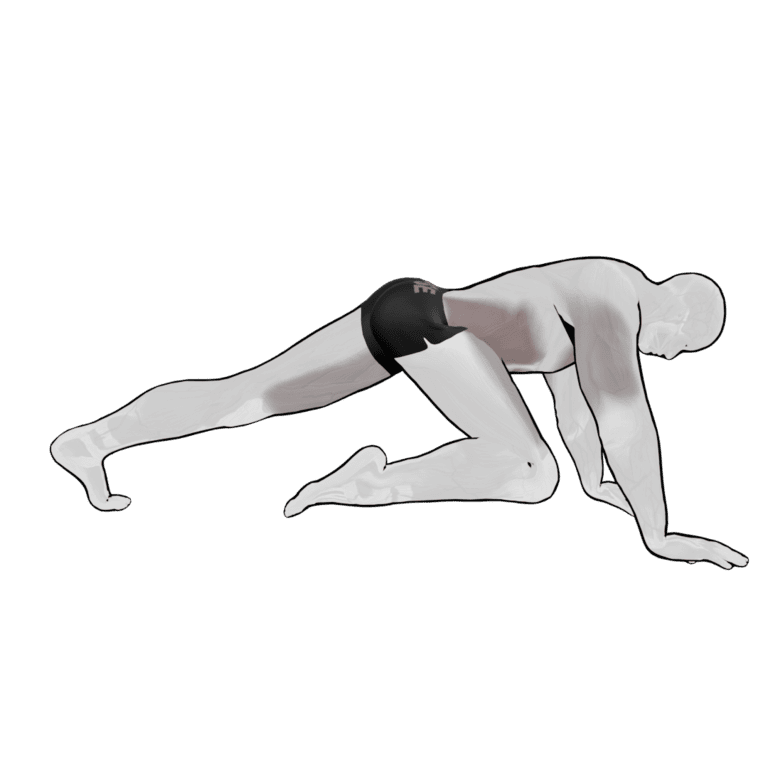 Mountain ClimbersFrom a push-up position, drive the knees toward the chest one at a time. The abs work hardest holding the hips level while the legs move.
 PlankBuild a rock-solid core with the plank — a no-equipment isometric hold that trains the deep abs. Perfect form, the common sagging mistake, and how to progress it.
Two or three short sessions a week is enough to matter. None of this replaces running; it makes the running you already do cost less.
One honest note on the trunk work above: isometric training was one of the two methods that did not improve economy in the review.1 Those moves are here because holding the pelvis level is a real job during a stride — not because a plank buys you economy. Keep them; do not expect them to do the work of the jumps below.
The jumping half — plyometrics
This is the half most runners skip, and below 12 km/h it has real evidence behind it — as an addition to the heavy work, not a replacement for it.
What it actually means. In the review, plyometric training is defined as light-load work — under 40% of your one-rep max — done explosively, with the aim of training the stretch-shortening cycle and muscle–tendon stiffness.1 In plain terms: your leg is a spring, and this trains the spring rather than the motor. Most of it is bodyweight.
What the trials actually did. The eleven plyometric studies used, in various combinations:
- Hops — single-leg hops, calf/ankle jumps
- Jumps — squat jumps, countermovement jumps, box jumps, hurdle jumps, depth (drop) jumps
- Bounds — single- and double-leg bounds, alternate-leg bounds, split scissor jumps
Typical dose: 6–12 weeks, 1–2.5 sessions per week, 2–5 sets of 4–20 repetitions, with 1–3 minutes rest between sets.1 That is a small amount of work — it is closer to ten focused minutes than to a gym session.
Why the 12 km/h ceiling exists. The effect is not a quirk of the statistics; it has a mechanical reading. Plyometric work changes tendon stiffness and how much elastic energy the leg stores and returns on each contact. At slower speeds there is a lot of pre-stretch to exploit, so a springier leg returns more free energy per step. As speed rises, the tendon is already doing most of that job, so adding compliance stops helping — and in the trials the effect at speeds above 12 km/h was not merely absent but slightly unfavourable.1
Two caveats worth stating plainly. Pooled across all speeds, plyometric training showed no significant effect — the benefit only appears once you separate the slow speeds out, and the review rates the certainty as moderate.1 And jumping is impact work: build the volume up over weeks rather than starting at the top of those ranges.
References
Footnotes
-
Llanos-Lagos C, Ramirez-Campillo R, Moran J, Sáez de Villarreal E. Effect of Strength Training Programs in Middle- and Long-Distance Runners’ Economy at Different Running Speeds: A Systematic Review with Meta-analysis. Sports Medicine, 2024;54(4):895–932. doi:10.1007/s40279-023-01978-y — 652 participants across moderately, well- and highly-trained runners. Effect sizes (negative = better economy): high-load −0.266 (p = 0.039) over 8.64–17.85 km/h, greater above 12 km/h; combined −0.426 (p = 0.018) over 10.00–14.45 km/h; plyometric −0.307 (p = 0.028) at ≤12 km/h but +0.163 (p = 0.280) above it, and non-significant when all speeds are pooled (−0.122, p = 0.167). Submaximal-load (40–79% 1RM) and isometric training: no improvement. Plyometric protocols: 11 studies, 6–12 weeks, 1–2.5 sessions/week, 2–5 sets × 4–20 reps, 1–3 min rest. Certainty rated moderate. The review found no moderating effect of participant training status — the test speed mattered more than the athlete’s calibre, which is why this article is organised around pace rather than experience level. ↩ ↩2 ↩3 ↩4 ↩5 ↩6 ↩7 ↩8
-
Blagrove RC, Howatson G, Hayes PR. Effects of Strength Training on the Physiological Determinants of Middle- and Long-Distance Running Performance: A Systematic Review. Sports Medicine, 2018;48(5):1117–1149. doi:10.1007/s40279-017-0835-7 — see also Llanos-Lagos C, et al. The Effect of Strength Training Methods on Middle-Distance and Long-Distance Runners’ Athletic Performance. Sports Medicine, 2024;54(7):1801–1833. doi:10.1007/s40279-024-02018-z ↩
-
Dorn TW, Schache AG, Pandy MG. Muscular strategy shift in human running: dependence of running speed on hip and ankle muscle performance. Journal of Experimental Biology, 2012;215(11):1944–1956. Read it ↩ ↩2